The Most Beautiful Sights in Lower Austria
Introduction
Lower Austria is home to several UNESCO World Heritage Sites and landmark historic buildings. The Baroque Melk Abbey rises above the Danube as part of the Wachau Cultural Landscape. Castles and palaces such as Schallaburg and Burg Kreuzenstein speak of centuries of regional history, while numerous museums make art, archaeology and natural history accessible. Abbeys such as Göttweig continue to embody monastic life and sacred art to this day.
Gorges, ravines and waterfalls — among them the Ötschergräben and the Myrafälle — cut through dramatic rock landscapes and are popular hiking destinations. The Donau-Auen National Park encompasses one of the largest continuous floodplain forests in Central Europe. The wine regions of the Wachau, Kamptal and Carnuntum, with their terraced vineyards and historic Kellergassen (wine cellar lanes), shape the landscape and invite visitors to linger over a tasting.
Families will find plenty of excursion options in Lower Austria. Wildlife parks offer encounters with native and exotic species, activity farms with swing trails and climbing parks bring outdoor adventure into nature, and bogland habitats with underwater worlds give children a playful way to discover the landscape.
Palaces, castles, and abbeys
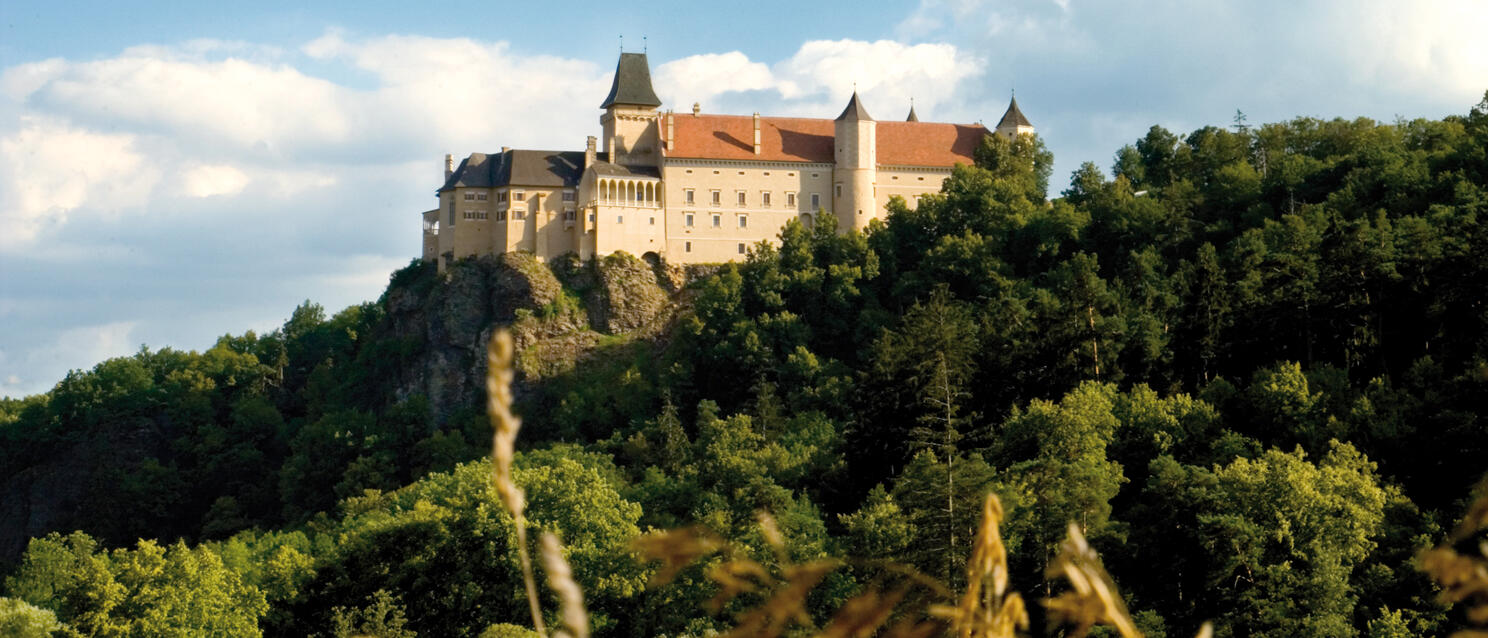
Between the Danube, vineyards, the granite landscapes of the Waldviertel and gently rolling hills, Lower Austria's sights tell stories of art, power, faith and craftsmanship. Castles and palaces open their doors for exhibitions, concerts and historic gardens. Monasteries and abbeys such as Melk display Baroque splendour in state rooms, libraries and beneath soaring domes. Museums explore art, archaeology, nature, wine and music. In the UNESCO World Heritage Sites of the Wachau and the Danube Limes, landscape, architecture and history interweave in particularly compelling ways.
Roman city, Baroque and art mile
Ravines, gorges and national parks
In Lower Austria, nature reveals itself in many forms. The gorges and ravines around the Ötscher send water rushing through rock and forest, while in the Vienna Alps, hikes up the Schneeberg, Rax and Semmering open up sweeping views. The Thayatal National Park is home to dense deciduous woodland, meandering river loops and habitats of the wildcat. In the wine regions of the Wachau, the Weinviertel and Carnuntum, vineyards, Kellergassen (wine cellar lanes) and cultural landscapes shape the scenery.
Wachau valley, Ysper gorge and Raxalpe
Excursion destinations for families
Lower Austria has plenty to offer families. Wildlife parks let children observe native animals up close, while climbing parks with varying difficulty levels cater for different ages.
The region's nature parks are well worth a visit too — moorland landscapes can be explored on guided trails. Alpine activity farms and themed experience gardens round off the offer, giving children the chance to discover the region's natural world in different ways.
Bear forest, adventure pasture, and climbing park
FAQs
UNESCO World Heritage Sites in Lower Austria
Lower Austria is home to several UNESCO World Heritage Sites, each bringing together nature and history in a compact area.
The Wachau Cultural Landscape, the Danube valley between Melk and Krems, has been settled since prehistoric times and is defined by wine terraces, medieval villages and monastery complexes.
Baden bei Wien is part of the Great Spa Towns of Europe — a group of eleven significant historic spa resorts that document European spa culture between 1700 and 1930.
The Semmering Railway is recognised as the world's first mountain railway built to standard gauge.
Along the Danube Limes, the remains of camps and forts tell the story of life on the edge of the Roman Empire.
Source: unesco.at