Cheers to Austria's Award-Winning Chefs
Introduction
Eating is more than just consuming food. It nourishes the soul, can be an expression of love, and brings people together. It tells stories, makes a country and its culture tangible, and creates memories that leave a lasting positive impression. In the same way, cooking is more than just preparing meals: It is a craft that can transform into an art form. For some, it is a calling that gives meaning to their own lives and profoundly enriches the lives of others.
Austria's top chefs are ambassadors of culinary artistry. From the ingredients provided by the land, they create true masterpieces, each with a distinct signature, that resonate far beyond Austria's borders. Here, we present some of the finest chefs in the country, whose talents are helping Austria become an increasingly renowned culinary destination. The stage is set!
Viennese cuisine
Viennese cuisine is a culinary legacy of the imperial Habsburg monarchy – a melting pot shaped by Bohemia, Hungary, Italy and the Balkans. From this diversity emerged dishes that still define the taste of Austria today, from delicate pastries such as Buchteln, apricot dumplings, Kaiserschmarren and pancakes to hearty classics like goulash, Wiener Schnitzel and Tafelspitz. It also holds a unique distinction: it is the only cuisine in the world named after a city.
Vienna has always been both stage and salon – where dining is a ritual, the coffee house a second living room, and enjoyment a subtle art. Today, this heritage continues in a contemporary way: lighter, more seasonal, often with a vegetarian focus and reinterpreted with creative ideas. Tradition remains present, but it is not preserved unchanged – it is served, shared and given a fresh, modern voice.
Top chefs of Viennese cuisine
Alpine cuisine
Creative Alpine cuisine thrives on dialogue – not only between tradition and the present, but also between kitchen and agriculture. Chefs work closely with farmers, know their alpine pastures, fish ponds and ageing cellars. Cheese is made from hay milk with patience and expertise, while fish grow slowly in clear mountain waters. These ingredients are not hidden, but showcased: pared back, precise and respectful.
Traditional techniques meet new ideas, fermentation meets fine acidity, and smoke meets Alpine herbs. For gourmets, this creates an experience rooted in origin. You can taste the landscape, the people behind it – and an approach that values quality over speed. Here, Austria presents itself as understated, confident and distinctly modern.
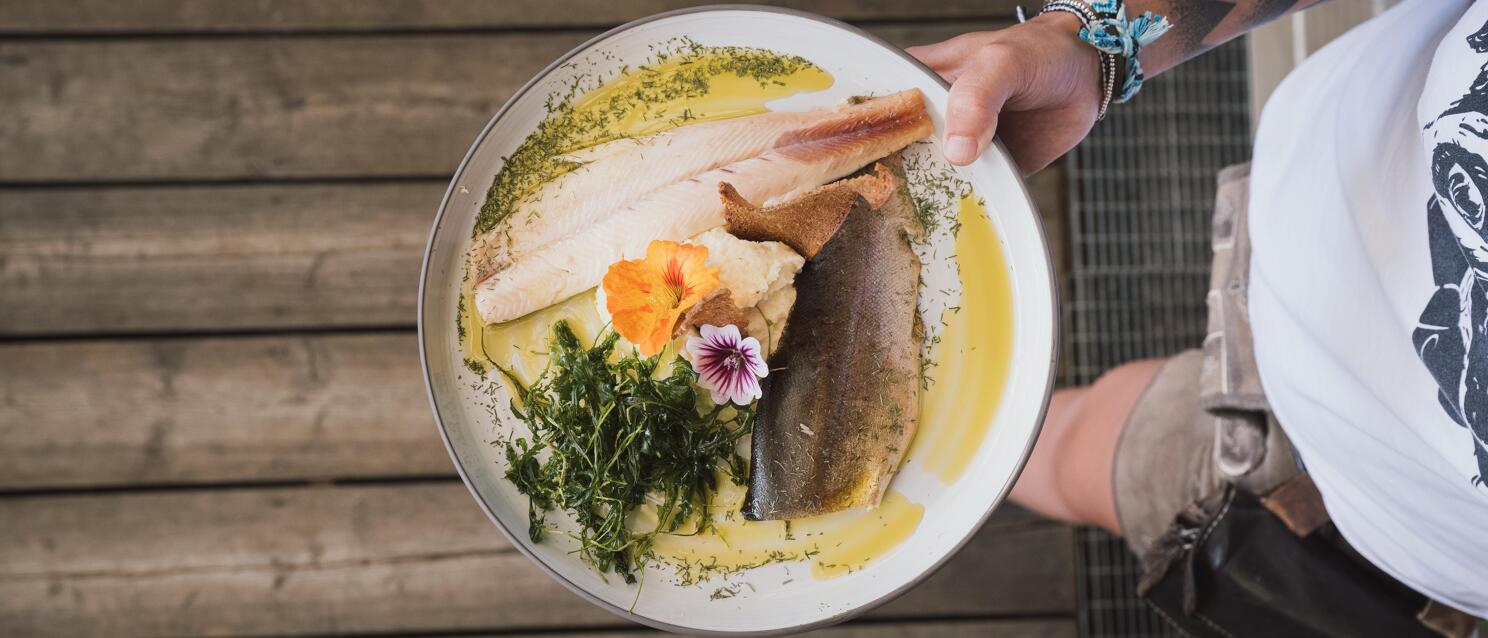
At Restaurant Döllerer, this genuine, unadulterated quality from regional producers is at the heart of the cuisine. Whether it is Bluntau char raised in pure spring water, pasture-raised beef, organic cheeses or wild fruits, herbs and mushrooms from the forest, trust forms the basis of close collaboration. The result is a constant stream of new ideas, proving that cuisine at an international level can be created using what nature provides close to home.
Top toque-awarded chefs of Alpine cuisine
Organic Cuisine
Many establishments now take a holistic approach to cuisine – from their own gardens and regional networks to ‘root to leaf’ principles and a respectful use of resources. Heritage varieties are making a return, craftsmanship is being reinterpreted, and tradition is not preserved unchanged but thoughtfully developed. The result is an organic cuisine that is deeply rooted yet open to new ideas.
Across alpine pastures, lakes and fertile plains, a style of cooking is emerging that does not need to be loud to make an impression. It follows the rhythm of the seasons, using what grows when it grows – with the understanding that good flavour takes time.
Carrots that reflect soil and sun. Grains with real character. Herbs that do more than decorate. Here, Austria shows its quiet strength: not spectacular, but consistent. A cuisine with a clear sense of purpose – and one that lingers.