1. Homepage
  2. Austria's Landscapes
  3. National Parks and Nature Park
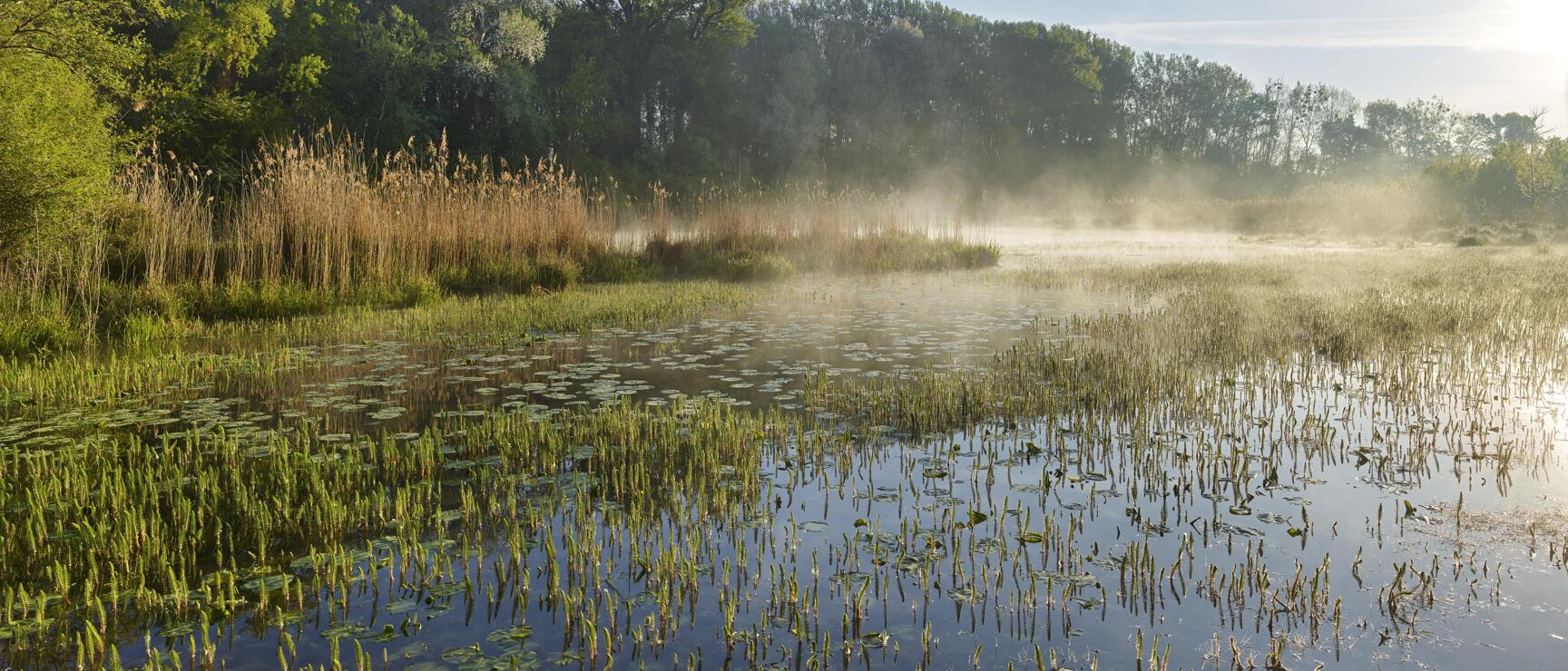
Donauauen

National and Nature Parks in Austria
Protected area for hikes and animal encounters

Austria's strictly protected national parks and biosphere reserves offer visitors the chance to discover nature in its original state and experience its scenic beauty.

Austria is one of Europe's greenest countries. Almost half of its land area is covered by forests, shaped by species-rich deciduous and mixed woodlands. These landscapes are home to a remarkably diverse range of wildlife and plant life. Around one third of Austria consists of protected natural landscapes and near-natural cultural landscapes that help safeguard biodiversity. In addition, around a quarter of the country's territory is protected by law, with some overlap between these areas.

The effort behind this is considerable, but the aim is clear: to preserve unique landscapes, protect sensitive habitats and biodiversity, and at the same time create space for recreation. Protected areas not only safeguard ecological diversity, but also preserve the places where nature holidays, hiking and quiet wildlife watching are possible.

In the national parks, protecting natural ecosystems is the highest priority. Here, nature can develop largely undisturbed, in line with strict international criteria. Nature parks, by contrast, combine conservation with sustainable use: cultural landscapes shaped over centuries remain alive and accessible. Biosphere parks are model regions within UNESCO's programme. They show how conservation, regional development and human life can work in harmony. And in Austria's few wilderness areas, nature is left entirely to itself - a rare refuge for endangered animal and plant species.

Source: Austrian Federal Ministry for Agriculture and Forestry, Climate and Environmental Protection, Regions and Water Management

Discover protected nature in Austria

Half of Austria is protected. Between high Alpine landscapes, floodplains and centuries-old cultural landscapes, remarkable natural spaces emerge – with clear conservation rules and room for richly varied nature experiences.

There are 47 nature parks across eight provinces in Austria. Together they cover more than 6,000 km² and include over 200 nature park municipalities with around 760,000 residents. Each nature park has its own distinctive landscape and cultural character.

Austria's national parks

Austria’s six national parks showcase impressive ecological diversity: Vast steppes, wild primeval and riparian forests, gentle valley landscapes, rugged limestone mountains, and ice-covered glaciers. Each national park has its own distinct character.

Austria's national parks protect valuable natural landscapes across 2,395 km² – around 3% of the country's total land area.

Sustainable outdoor-fun

Hohe Tauern National Park

The Hohe Tauern National Park spans regions in Tirol, Carinthia, and the SalzburgerLand. This unique natural world is crisscrossed with numerous hiking trails - offering around 4,300 kilometres / 2,672 miles of alpine paths. Mountain huts and snack stations provide convenient stops for extended tours.

The region is perfect for experiences that open your eyes and heart to the beauty of nature:

Commitment to people, animals, nature

How do you become a national park ranger?

They say people excel at what they love doing. Hermann Jansesberger, one of over 200 rangers in the Kalkalpen national park, is a prime example of this. Hermann is a true “nature enthusiast.” He knows every moss by name and can vividly recount the ancient history of any rock. Every beetle he encounters is worth a pause. So, how does one become a national park ranger?

A love for nature and enjoyment of working with people are essential for anyone looking to become a ranger. The roles vary from park to park but generally include guiding visitors and school groups, maintaining and monitoring educational trails and observation huts, giving talks, overseeing the area, and carrying out monitoring tasks.

“When I’m birdwatching at Neusiedler See-Seewinkel National Park, I feel like I have arrived. Everything’s so quiet, and all I hear and see is nature’s fantastic spectacle.”

Elena TuracRanger at Burgenland's Neusiedler See-Seewinkel National Park

Austria's biosphere reserves

In UNESCO biosphere reserves, environmental protection is the top priority. At the same time, we humans use them for agriculture, sport and recreation. And yet the ecosystems are thriving.

Austria's four UNESCO biosphere parks cover around 2,872 km² in total – model regions where people and nature coexist in balance.

Austria's nature parks

Nature is used in a variety of ways in nature parks as cultural landscapes - mainly for agriculture and as recreational areas. Careful attention is paid to protecting and maintaining the biological balance and biodiversity.
Awaken all your senses!

Why does nature feel so restorative?

Nature’s feel-good package is simple yet powerful, benefiting both body and mind with fresh air, warm sunshine, vibrant forests, meadows, and natural light.

Our senses come alive in meadows full of diverse flowers and rich biodiversity. The more variety, the better we feel. Nature also grounds us - sitting at a desk doesn’t fully engage our senses or soul. Humans are made for nature, not computers. The best place to recharge is in the mountains or ancient forests, as we are naturally attuned to thrive in these surroundings.

Climate Protection Info

Why is biodiversity so important for climate protection?

An intact ecosystem is home to countless species of microorganisms, fungi, plants and animals. All these creatures and the environment they live in need each other and are intricately balanced. As ecosystems in their own right, they make a significant contribution to a functioning climate and provide fresh air and clean water. A healthy forest, for example, filters the greenhouse gas CO₂ from the air. Biodiversity is therefore vital for humans, animals and plants.

If the balance and interaction of organisms is disturbed by external influences, the intact biosphere begins to falter. However, a stable climate requires a healthy flora and fauna. Austria and its regions are aware of their responsibility and are taking numerous measures to preserve and protect precious natural habitats and strengthen biodiversity.

FAQ

A national park is a particularly valuable natural area designated as a protected site according to the criteria of the International Union for Conservation of Nature (IUCN). Here, protecting ecosystems is the top priority. In the core zones, nature can develop largely undisturbed, while visitors can experience the landscape in a mindful way.

A nature park protects and preserves a cultural landscape shaped by the interaction between people and nature over centuries. Nature parks provide habitats for many species, but they are also used sustainably – for example through agriculture – and offer space for recreation, nature education and regional development.

The ecological diversity of Austria’s six national parks is truly impressive: Vast steppes, wild-growing primeval and floodplain forests, gentle valley landscapes, rugged limestone mountains, and icy glaciers. Each national park showcases its own unique character in terms of wildlife and plant life.

In UNESCO biosphere parks, people make use of nature in a sustainable way. Ecological research for sustainable development is just as important here as eco-friendly economic practices. The ecosystems in these biosphere parks, defined by internationally agreed standards, are carefully protected and maintained.

In Austria, you'll find the following official biosphere parks:

A wilderness area is completely untouched by humans, offering an undisturbed haven for wildlife and plant species, while also helping to reduce CO2 levels. Wilderness areas are becoming increasingly important in the face of climate change. In Austria, you can find such pristine, wild areas in the Göstling Alps of Lower Austria, particularly in Dürrenstein-Lassingtal – the country's only designated wilderness area. Covering 4.2 km2 / 1037 ac, the "Rothwald primeval forest" is gradually being expanded as a protected reserve. Since 2003, this wilderness area has been under IUCN protection as a strict nature reserve.

There are other protected areas that follow the same non-intervention management style, similar to the primeval forest as a natural landscape type. These include the core zones of strictly protected national parks, where nature is allowed to thrive without human interference, and the Natural Forest Reserves.

Spanning an area of 1,856 km2 / 458,627 ac, Hohe Tauern National Park is Austria’s oldest and biggest. It is split into a core zone (1,213 km2 / 299,738 ac) and a larger outer zone (643 km2 / 158,889 ac) and stretches over three provinces.

  • Are you allowed to ride a bike in a national park?

    On marked cycle routes leading through the national park area, cycling is allowed. Cycling off the paths is not permitted.

  • Are you allowed to swim or take a boat ride?

    Boating and swimming are permitted in certain designated areas. Flora and fauna are protected on all other bodies of water.

  • Are dogs allowed in national parks?
    Yes, dogs are allowed in all six Austrian national parks. To protect wildlife, they must be kept on a lead at all times. Additional rules may apply in particularly sensitive areas.

  • Are you allowed to pick flowers and mushrooms?

    No, national parks are valuable natural reserves. Natural materials may therefore not be removed.

  • Are you allowed to camp in a National Park?

    Camping is only permitted on official and explicitly designated campsites.

  • Are you allowed to stray off the designated paths?

    No, the designated routes must be followed. Only then a national park experience in harmony with nature is possible.

You might also like

Discover the Best of Austria

Sign up for our newsletter and enjoy exclusive access to:

  • Insider tips for your next Austrian holiday

  • Delicious recipes

  • Must-see events and cultural highlights

  • Special travel deals and offers