Rauhnacht Customs in Austria
The mystical rituals of the Rauhnächte
Introduction
Mysterious rituals and age-old customs shape the Rauhnächte, the nights around the turn of the year, in Austria. In many places, Perchten (masked figures from Alpine folklore) parade through the streets, while people burn herbs and resins to cleanse their homes with smoke. According to old folk belief, these rituals protect against misfortune.
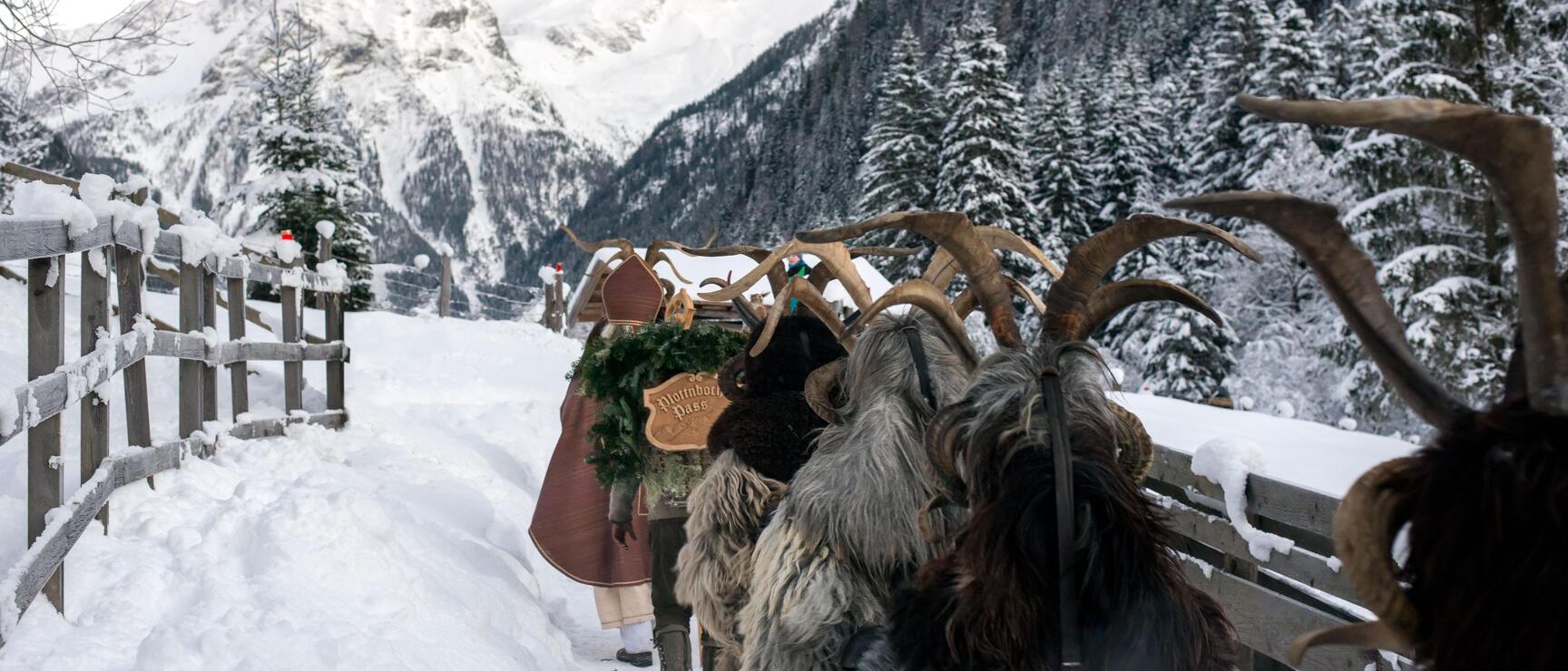
The Krampus is also part of Austria’s winter traditions and usually appears around St Nicholas’ Day. While St Nicholas goes back to Saint Nicholas of Myra, the origins of the Krampus custom are still unclear, and whether it has pre-Christian roots is disputed. The figures wear masks, horns and fur.
In Gastein, the custom is especially alive. On 5 and 6 December, more than 100 ‘Passen’ (Krampus groups) wearing elaborately carved wooden masks make their way through the villages, accompanied by St Nicholas. According to local tradition, the Krampuses drive away evil.
Discover the mystical Rauhnächte
Winter traditions around the Rauhnächte
Krampus, St. Nicholas and the 'nice children'
Around Christmas, people not only celebrate the birth of Christ but also indulge in many pagan customs. This can sometimes be quite frightening.
When Christoph Waltz spoke about Krampus on the Jimmy Fallon Show in 2014, the US audience could no longer contain their excitement. In disbelief, people across the pond heard that during the peaceful Advent season in Austria, a masked devil figure dressed in furs goes around threatening children with a rod.
Well, it's not quite that bad. After all, the Krampus is the companion of the ever-popular St. Nicholas, who presents well-behaved children with sweets and nuts on 6 December.
Krampus runs in Austria
In the nights around 5 December, age-old myths come to life. During the Krampus parades, figures clad in fur, bells and fearsome masks roam Austria’s streets – a winter tradition symbolising the struggle between light and darkness.The customs of the Rauhnächte
Many customs around the Rauhnächte are about the future. The Rauhnächte are the nights between Christmas and 6 January, and depending on the region, anything from three to twelve nights are counted. In some areas, people start ‘Losen’ as early as St Thomas’ Night, from 20 to 21 December.
In dialect, ‘Losen’ means ‘listening’. For this custom, people try to learn something about their future by listening closely. They might meet at a lonely crossroads, for example, and listen to the sounds around them. According to old folk belief, cheerful singing means a wedding is coming, while the sound of a saw means someone will die.
Between fear and good fortune
When the Wild Hunt rides
The Rauhnächte were long seen as a dangerous time. According to folk belief, the Wild Hunt, a band of ghostly figures that brings misfortune, rides through the skies on these nights. That’s why, in some parts of Austria, people don’t hang out their washing, so the Wild Hunt can’t get caught up in it.
The ‘Habergoaß’ is another feared figure. At some Perchten parades in SalzburgerLand, this goat-like creature appears with a basket on its back, in which, legend has it, it carries children away.
Branches that bring luck
Winter traditions also include customs for good luck. Mistletoe, famous from the magic potion in the Asterix comics, is a symbol of good luck in folk belief. At Christmas, sprigs hang in some doorways, and couples kiss underneath them for luck in love.
On 4 December, St Barbara’s Day, people traditionally put cherry or other fruit-tree branches in a vase. If these ‘Barbara branches’ blossom by Christmas Eve, it’s a good sign for the new year.
Burning incense during the Rauhnächte
Burning incense is still a common winter custom, especially in rural areas. On at least one night between Christmas and Epiphany, people carry smoke through their homes and stables, often using incense. According to folk belief, the ritual protects people and animals from harm.
Another legend says that at midnight, animals can speak like humans and tell the future. Tempting as that sounds, anyone who listens to them is said to die. To ward off misfortune, people used to swallow ‘Schluckbildchen’, tiny slips of paper usually printed with images of the Virgin Mary.
To find out more about these rituals, join one of the Rauhnacht guided tours in Hall in Tirol. On a walk through the old town, you’ll learn about the customs and then find out how traditional incense burning works.
Rauhnacht customs that live on
Every four years, between New Year’s Day and Epiphany, the Gastein Perchten parade through the Gastein valley in the Pongau region of SalzburgerLand. With dances and bows, and wearing elaborately decorated caps up to several metres high, they bring wishes of good luck and blessings. Since 2011, the Gastein Perchten have been listed in Austria’s national inventory of Intangible Cultural Heritage, kept by the Austrian Commission for UNESCO.
The Ebensee Glöcklerlauf in the Salzkammergut is also on the national inventory. On the last of the Rauhnächte, 5 January, the ‘Glöckler’ (bell runners) make their way through the dark in white costumes, with bells and illuminated caps. The custom has been recognised since 2010.