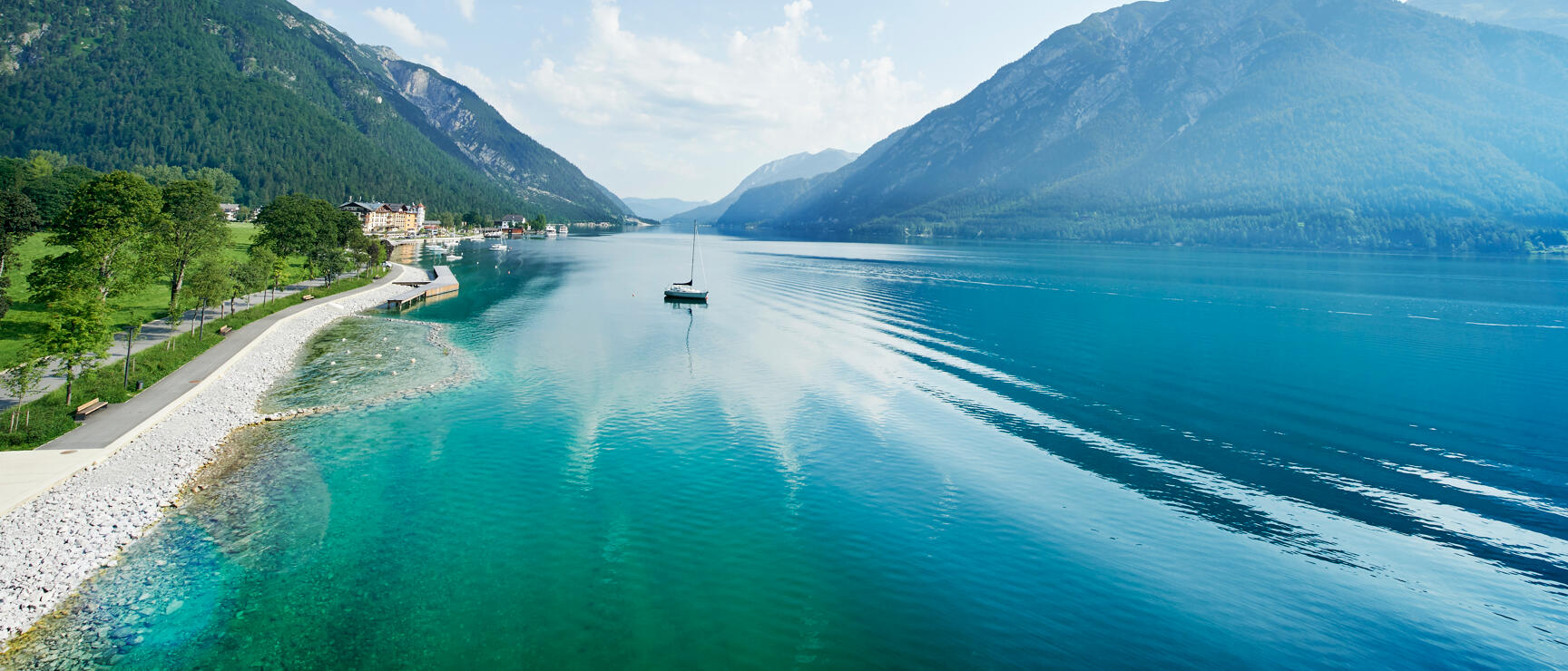
Lake Achensee in Tirol
Water sports on the turquoise-blue bathing lake between the mountains
Introduction
At around 6.8 square kilometres, the Achensee is the largest lake in Tirol, lying at 929 metres above sea level between the Karwendel and Rofan ranges. Its turquoise colour comes from the limestone of the surrounding mountains and the clarity of the water. Windsurfers and sailors value the steady valley wind, which picks up from late morning. Sailing and windsurfing schools offer courses and equipment hire.
The lakeside lidos at Pertisau, Achenkirch and Maurach have beaches, wooden jetties, lawns for sunbathing, adventure playgrounds and restaurants. In summer, the water reaches temperatures of up to 22°C. The villages around the lake can also be reached by Achensee boat services. A steamship has been in service on the lake since 1887. A cycle path runs for around 20 kilometres along the western shore, and serves as a starting point for mountain bikers heading into the Karwendel. Walking routes range from easy circuits along the shore to alpine ascents of the Seebergspitze.
Discover Lake Achensee
Lidos and bathing spots
Top highlights at Lake Achensee
The most beautiful resorts on Lake Achensee
Food and drink around Lake Achensee
Around the Achensee, the cooking ranges from Tirolean inn classics to restaurants with Michelin stars and Gault&Millau toques. Menus set modern interpretations alongside traditional dishes, and many kitchens work with produce from the surrounding region.
Gründler's Genießer Wirtshaus, Genießerhotel Alpin, Achenkirch – 1 Bib Gourmand, 2 Gault&Millau toques
Gründler's Gourmet Stüberl, Genießerhotel Alpin, Achenkirch – 1 Michelin star, 4 Gault&Millau toques
Wilderer Gourmetstube, Hotel Das Karwendel, Pertisau – 2 Gault&Millau toques
Genussrestaurant Michl Stub'n, Hotel Vier Jahreszeiten, Maurach – 1 Gault&Millau toque
Fischerwirt, Achenkirch
Special events
5 things you should know about Lake Achensee
Accommodation
Raised bogs in the Karwendel Nature Park
In the Karwendel Nature Park near Achenkirch, the raised bogs were drained in the 1970s by a network of ditches, to create grazing land and to extract peat.
Restoration followed around 15 years later: larch dams were built into the ditches so that the sloping mires would no longer lose water. Timber dams hold water very effectively, and the retained water has allowed the peat moss to grow again. The Karwendel's raised bogs rest on peat layers several metres thick, built up over thousands of years.
The bogs have been monitored and managed regularly ever since. Among the species that have returned are sundew, cranberry and the white-faced darter, a dragonfly that finds its habitat in the acidic ground of the bog.