The Most Beautiful Sights in Upper Austria
Introduction
Anyone continuing from Linz quickly realises: nature doesn’t begin at the city limits – it is woven into everyday life. In Kalkalpen National Park, one of Austria’s largest continuous forest areas unfolds. Ancient beech trees, streams and diverse habitats shape the landscape. Hiking here means immersing yourself, listening, and slowing down.
Lake Attersee reveals shifting shades of blue and green depending on the light. Sailing, swimming, sitting by the shore and looking out towards the mountains – it has long been a place for summer retreats.
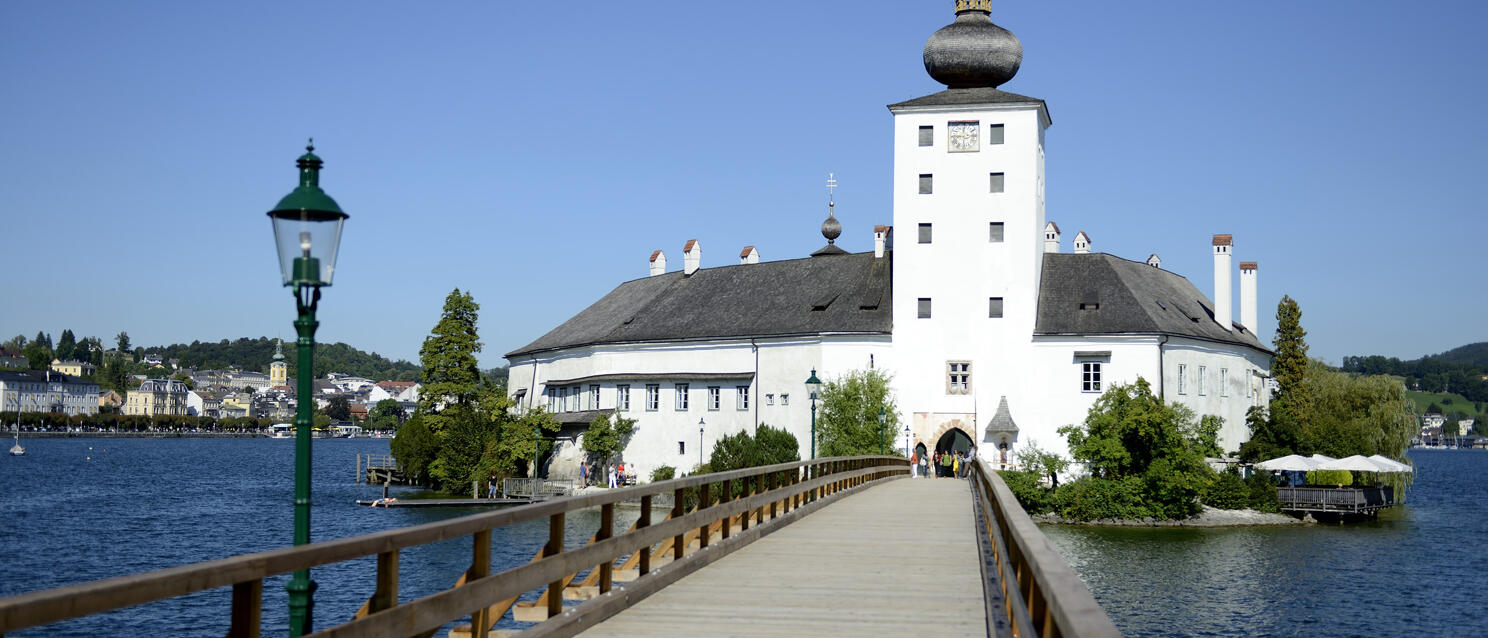
At the Schlögener Schlinge, the Danube curves dramatically through granite rock. From the viewpoint, the perspective on the river changes strikingly. At Lake Traunsee, the mountains are reflected in the water, while Seeschloss Ort appears to float effortlessly on the lake. Here, history and landscape intertwine – not as a backdrop, but as a living environment.
Contemporary art meets monasteries and castles
Linz surprises. A compelling contrast unfolds between the baroque old town and cutting-edge media art. At the Lentos Art Museum, international contemporary works meet the Danube, while just across the river the Ars Electronica Center lights up the skyline.
Beyond the city, a dense network of cultural landmarks opens up. Monasteries such as St. Florian and Schlierbach are baroque centres of music and learning. Castles and historic residences – from Clam in the Mühlviertel to Ort on Lake Traunsee – stand by the water or above river valleys.
In the Hallstatt-Dachstein/Salzkammergut region, a UNESCO World Heritage Site, dramatic landscapes meet thousands of years of cultural history. Museums across the province explore salt, craftsmanship, contemporary art and recent history. Historic market squares, industrial architecture and modern buildings show that Upper Austria not only preserves its heritage, but continues to shape it. Tradition here is not static – it is the foundation for new perspectives.
Modern museums, castles and monasteries
Between the Danube, lakes and summits
In Upper Austria, the landscape reveals itself in many ways – in the riparian forests along the riverbanks, in the morning mist over Lake Attersee, and in the rugged rock faces of the Dachstein massif. Those who set out early can hear the gentle movement of the Danube. Cycling routes follow its course, passing through small historic towns where craftsmanship and traditional inn culture have been part of daily life for generations.
Further south, lakes for swimming lie between mountains and villages. Lake Traunsee appears deep green, while Lake Attersee shimmers in shades of turquoise. Whether swimming, sailing or simply sitting by the jetty, the water sets the pace.
In the Salzkammergut and Kalkalpen National Park, trails lead across alpine meadows and forests up to scenic viewpoints. To the north, the Mühlviertel offers a quieter contrast, with rolling hills and striking granite formations shaping both the landscape and the character of its villages. The close proximity of rivers, lakes, rock formations and highlands makes the region rich in variety.
More nature highlights in Upper Austria
Excursions with kids
How much adventure can you fit into a family day? In Upper Austria, more than you might expect. Leisure parks offer water play areas, climbing parks and themed trails through forests and meadows. Many destinations are designed with families in mind – with short walking distances, picnic spots, regional food and plenty of space to relax.
In the Almtal valley, animals such as bears, lynx and ibex can be observed in dedicated areas. Interactive attractions invite visitors to explore technology and discover scientific principles. Summer toboggan runs wind their way down the slopes – the rush of air on your face, laughter all around.
That is part of the appeal: combining time in nature with a sense of adventure, culture with activity. A single day becomes a story you will share for years to come. And Upper Austria shows just how easy it is to explore together.
Tree-top walks, wildlife and a dinosaur world
FAQs
Kalkalpen national park
Kalkalpen National Park spans a vast forest area of around 209 km². A range of forest types shape the landscape, interwoven with an extensive network of streams and numerous springs. Parts of the beech forests have been recognised as a UNESCO World Natural Heritage Site since 2017.
A wide variety of animal, plant and fungal species have been recorded here, including mammals, breeding birds and insects. Species such as the alpine longhorn beetle are also found in the area. Sightings of golden eagles, lynx and otters are regularly documented within the park.
The national park is not an exhibition space, but a protected area with diverse habitats. Guided tours with park rangers offer insight into this landscape.