Styria in Summer
Holidays between the Dachstein glacier, thermal baths and wine
Introduction
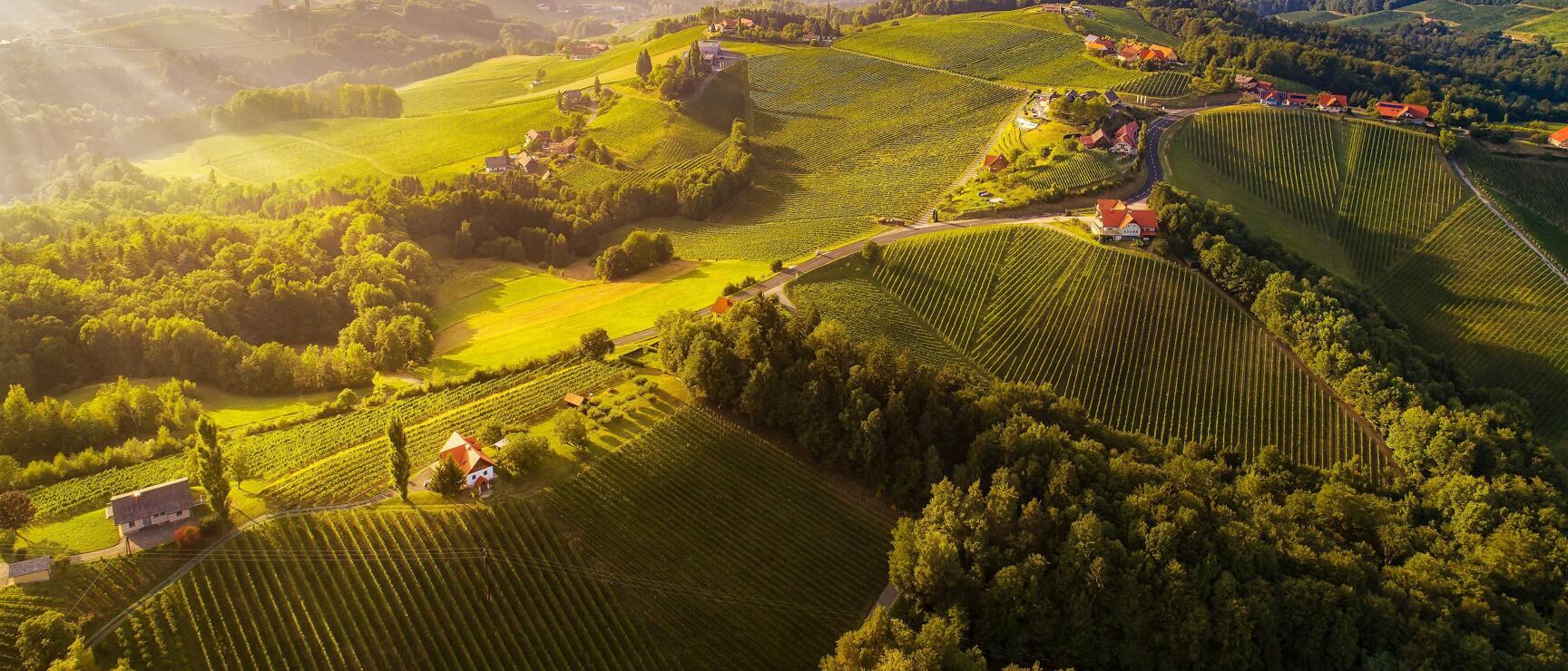
Styria impresses with its varied landscapes, from the mountainous north and the urban centre around the provincial capital of Graz to the gently rolling south with its vineyard-covered hills. A remarkable difference in altitude of 5,838 metres separates the highest and lowest points in the province: from the Dachstein, Styria's highest mountain at 2,995 metres, to the healing spring at Rogner Bad Blumau, which reaches 2,843 metres below ground. It is precisely these contrasts that are valued by both guests and locals alike, revealing themselves in ever-changing ways throughout the year.
Active holidaymakers will find high-alpine routes, family-friendly hiking trails, bike trails and peaceful alpine pastures, with nature always close at hand and easy to experience. Styria is rich in protected areas, including a UNESCO wilderness area, seven nature parks, one biosphere park and numerous Natura 2000 sites. Thermal spas, healing baths and natural springs have long been part of the province's heritage. Their warmth brings rest and regeneration, whether after a long day of hiking or during a quiet moment spent enjoying the water.
Styrian cuisine also reflects the landscape: fresh wines, crisp apples and the region's famous pumpkin seed oil all represent local identity and seasonal variety. From the wine-growing south to the orchards of the east, enjoyment becomes an experience here.
At the heart of Styria lies Graz, a city that combines history, contemporary architecture and a creative way of life. Its Old Town and Eggenberg Palace are part of the UNESCO World Heritage Site and invite visitors to discover past and present side by side. Castles, palaces, lively markets, museums and event venues shape the cultural character of the province, creating encounters between tradition and innovation. Styria offers a wide range of leisure activities. Yet one thing unites all parts of the province: the warmth of its people and the joy of good living.
With the Steiermark Card, you can explore around 180 attractions from April to October and enjoy discounts and benefits with more than 50 bonus partners.
Events in Styria
Traditional and modern highlights are shown in the Calendar of events
Meet Styria
Top highlights
Tours
Regions
Cities and places
The Styrian hat with chamois beard
Also known as the Ausseer hat, it once adorned the heads of the wealthy during the Biedermeier era. Today, it is worn by those who value tradition, as well as fans of Styria.
The hallmark of a genuine Styrian hat is the black or green felt with a green band. This iconic symbol of Styria is adorned with a chamois brush or chamois back hair. An additional capercaillie feather signifies the hunter's connection.
The side on which the chamois brush is attached reveals the wearer's origin: Upper Styrians fasten the tuft of hair at the back, while in the rest of Styria, it is worn on the side. Beneath the Styrian hat, the traditional grey Styrian suit made from pure wool and genuine Goiserer shoes complete the typical Styrian outfit for men.
Origin: Early 19th century in Ausseerland
Material: Hair felt
Colour: grey-green
Special feature: Chamois beard, capercaillie feather
Top events
Famous personalities
Recipes
Unique places to stay
Nature reserves
It is not only visitors who can immerse themselves in unspoilt nature in Austria's 'Green Heart'. Rare plants and animals, in particular, find protected habitats here.
Styria brings together an impressive range of protected areas: one national park, seven nature parks, one UNESCO biosphere reserve, the Lassingtal as a UNESCO wilderness area – the highest level of protection – and more than 50 Natura 2000 sites. These natural spaces are among the province's true gems. Each has its own character, shaped by valuable natural and cultural landscapes – from vineyards and alpine pastures to wooded pond and river areas and traditional orchards – all of which have developed over centuries and are carefully preserved today.