Introduction
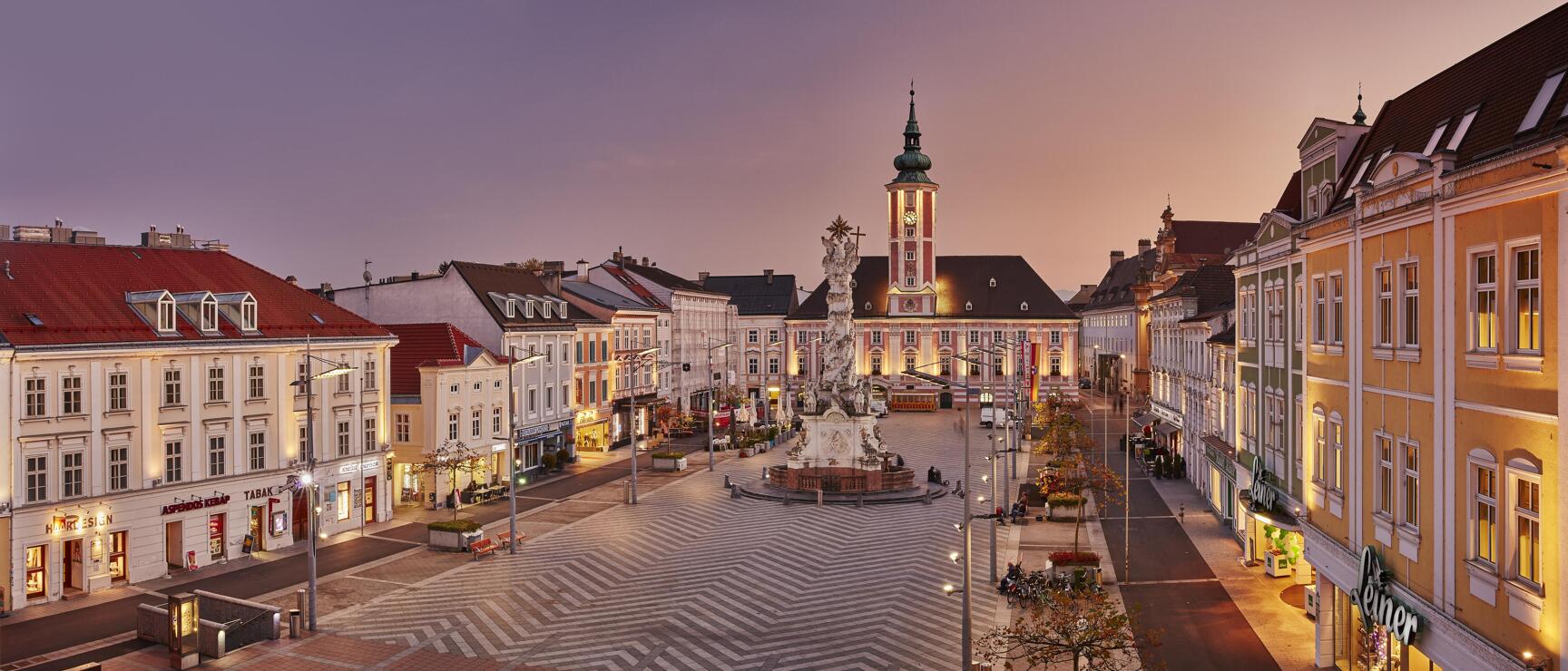
St. Pölten holds Austria's oldest documented town charter, granted in 1159 by Bishop Konrad of Passau. In the 17th and 18th centuries, the city became a stage for the Baroque era. When Jakob Prandtauer moved here in 1689, it sparked a true building boom. Monasteries, churches and townhouses still tell of a time when generous design and fine craftsmanship shaped the cityscape.
At the same time, St. Pölten is Austria's youngest provincial capital and has its sights firmly set on the future. At the Festspielhaus, classical music, contemporary compositions, dance and performance come together. The modern government district, with its striking 'Landtagsschiff', makes a confident architectural statement. The cultural district, home to the Landesmuseum and Klangturm, adds to the dialogue between past and present.
Around St. Pölten, experiences begin right on the doorstep. Cycling along the Traisental Cycle Path, swimming in natural lakes, taking a ride on the Mariazell Railway or heading out to the Wachau: the landscape opens up, vineyards trace gentle lines across the hills, and riverbanks invite you to pause for a moment. At the heart of it all is a city built on historic foundations.
The Lower Austria Card includes free entry to about 365 attractions throughout Lower Austria.
Meet St. Pölten
Top highlights
Tours
Traisental cycle path
The Traisental path is perfect for a family cycling trip: The 111-kilometre route leads through the Traisental wine country in the Mostviertel region and boasts varied landscapes, from the gentle hills south of the Danube to the mountains of the Mostviertel Alps.
The overall route consists of several sections you can pick and choose from. Our recommendation for families with children: start in Mariazell or Kernhof and ride to Traismauer.
Top events
Traditional country inns, taverns and restaurants
Lower Austria has a strong culinary heart - from the traditional to the experimental, but always down to earth. Its award-winning gastronomy is as impressive as it is delicious – from the Waldviertel to the Weinviertel, from the Wachau to the Vienna Woods. Alongside the creative chefs, it is often the region’s finest local ingredients that take centre stage on the plate.
Make sure to visit a traditional Austrian "Wirtshaus" (inn). These quaint places are where hospitality, characterful locals and excellent regional dishes come together - from crispy roast pork to Marchfeld asparagus and apricot dumplings from the Wachau.