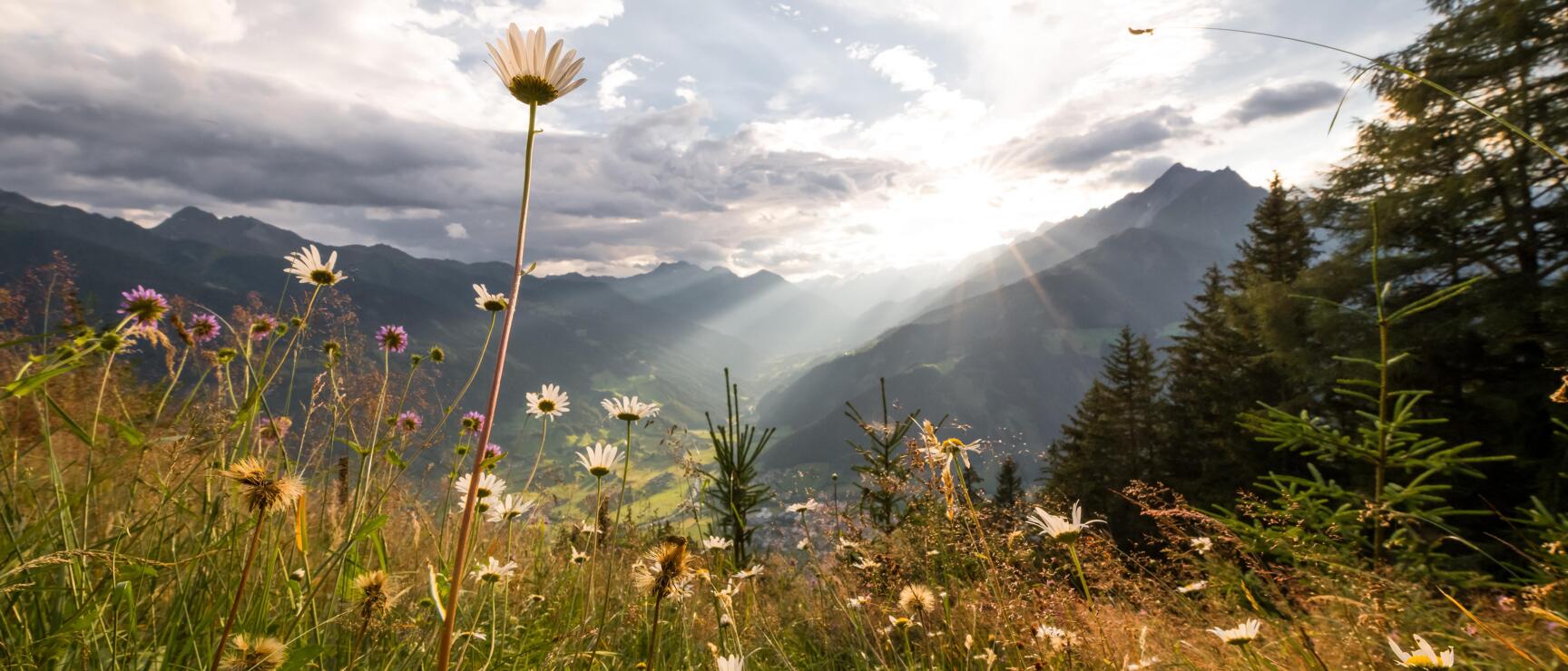
Wildflower meadow with daisies in foreground, sunrays over alpine valley with mountains in background.
  1. Homepage
  2. Austria's Landscapes
  3. Biodiversity in Austria

Biodiversity in Austria
Natural areas and habitats for plants and animals

Biodiversity describes the variety of habitats, plant and animal species. Austria has numerous protected areas and habitat restoration projects.

Biodiversity in Austria spans a range of landscapes — from the Alps and forests to moorland, rivers and lakes. Many of these areas provide habitats for plants and animals and define the character of their regions.

National parks, protected areas and boglands sit alongside Alpine meadows, forests and waterways. Hiking and exploring Austria brings these different habitats within close reach. Each region tells its own story, shaped by mountains, water and cultural landscapes.

Habitats, protected areas and species

Regions across Austria work with a range of approaches — including conservation programmes, habitat restoration and visitor management in selected natural areas.

Fauna and flora in Austria

Fauna: Diversity of wildlife

Austria encompasses a range of habitats, from Alpine regions to the steppe landscapes of the east. Woodland and meadow areas are home to roe deer, red deer, hares, pheasants, foxes, badgers, martens and partridges. In the Alps, chamois, marmots, eagles and ibex can be found.

The reed beds around Lake Neusiedl are a significant habitat for numerous bird species, including herons, spoonbills, avocets and wild geese. Rivers, lakes and wetlands also provide habitats for various fish and amphibian species.

Flora: Diversity of the plant world

Austria's flora is remarkably diverse, boasting around 3,500 species of ferns and flowering plants, thanks to its varied landscapes and climates. Nearly half of the country is covered by forests, predominantly oak, beech, and spruce, with larches and stone pines flourishing at higher altitudes.

The northern Alpine foothills are marked by lush grasslands, while the Pannonian region features distinctive steppe heaths. The Alpine flora is particularly striking, showcasing iconic species such as gentian, edelweiss, and arnica.

Biodiversity on the water

Biodiversity in the forest and in the mountains

National parks in Austria

Austria's habitats and species

Protected areas in Austria

Austria encompasses national parks, nature parks, biosphere parks and further protected areas such as the Dürrenstein-Lassingtal wilderness. Here, land use, stewardship and visitor management are aligned with the needs of sensitive natural environments. Marked trails and quiet zones help preserve forests, floodplains and Alpine landscapes as functioning habitats.

Restoring wild river landscapes

Wild river landscapes are among Austria's most distinctive waterways. Some rivers are accompanied by habitat restoration measures to preserve ecosystems for wildlife and plants. One example is the Isel in Tirol, designated a Natura 2000 protected area in 2015.

Moorland and wetlands

Peatbogs are among Austria's most distinctive wetland habitats. Under the Austrian Moorland Strategy 2030+, measures are being implemented to manage and rewet moorland areas.

Alpine farming

Alpine farming has shaped cultural landscapes across many of Austria's regions for centuries. The Almen (Alpine pastures) are used for agriculture and at the same time provide habitats for a variety of plant and animal species. Their vegetation also plays a role in water retention and soil quality.

Exploring nature respectfully

Tips for sensitive natural areas

  • Stay on marked paths and avoid entering sensitive habitats such as moorland and wetlands.

  • Observe wildlife and plants from a distance, and take nothing from nature — including stones.

  • Enjoy regional and seasonal produce.

  • Take your litter home: everything you bring in, take back out.

  • Many regions can be explored by train, bus, bike or on foot.

  • Join a guided nature walk or a citizen science project, such as bird or amphibian spotting.

  • Respect the rules in forests and at lakes: no open fires outside designated areas.

FAQs

Austria encompasses habitats including the Alps, forests, lakes and moorland, home to a wide range of plant and animal species, including rare ones. National parks, protected areas and regional initiatives focus on preserving habitats and landscapes.

Measures include protected areas, river restoration projects, moorland management and diverse forms of land use. The Austrian Biodiversity Strategy 2030+ covers areas including:

  • Protection and connectivity of habitats

  • Measures for river and moorland landscapes

  • Reducing land sealing

  • Legal frameworks

  • Funding for habitat and species projects

  • Information and education

  • Scientific research

Many everyday choices have an impact on natural and cultural environments. The University of Vienna highlights examples such as consuming more consciously and using products for longer, choosing regional and seasonal food, travelling by train, bus or bike, avoiding waste and taking litter home, and observing wildlife and plants from a distance only.

Biodiversity refers to the variety of animal and plant species, habitats and ecological relationships — some 1.74 million species of animals, plants, fungi and microorganisms are known to exist on Earth. In Austria, these diverse habitats range from Alpine regions and forests to river landscapes, moorland and lakes. National parks and other protected areas encompass a wide range of landscapes, plants and animals.

National parks such as the Hohe Tauern, Donau-Auen and Kalkalpen national parks encompass a variety of landscapes and habitats. Nature parks, biosphere parks, moorland and Alpine pasture regions are also home to diverse plant and animal life. Nature trails and ranger-led tours offer insights into forests, waterways and mountain environments.

You might also like

Discover the Best of Austria

Sign up for our newsletter and enjoy exclusive access to:

  • Insider tips and itineraries for your next trip to Austria

  • Traditional recipes

  • Must-see events and cultural highlights

  • Interesting stories about Austria