Landscapes and Nature in Austria
Alps, lakes, woods, and waterfalls
Introduction
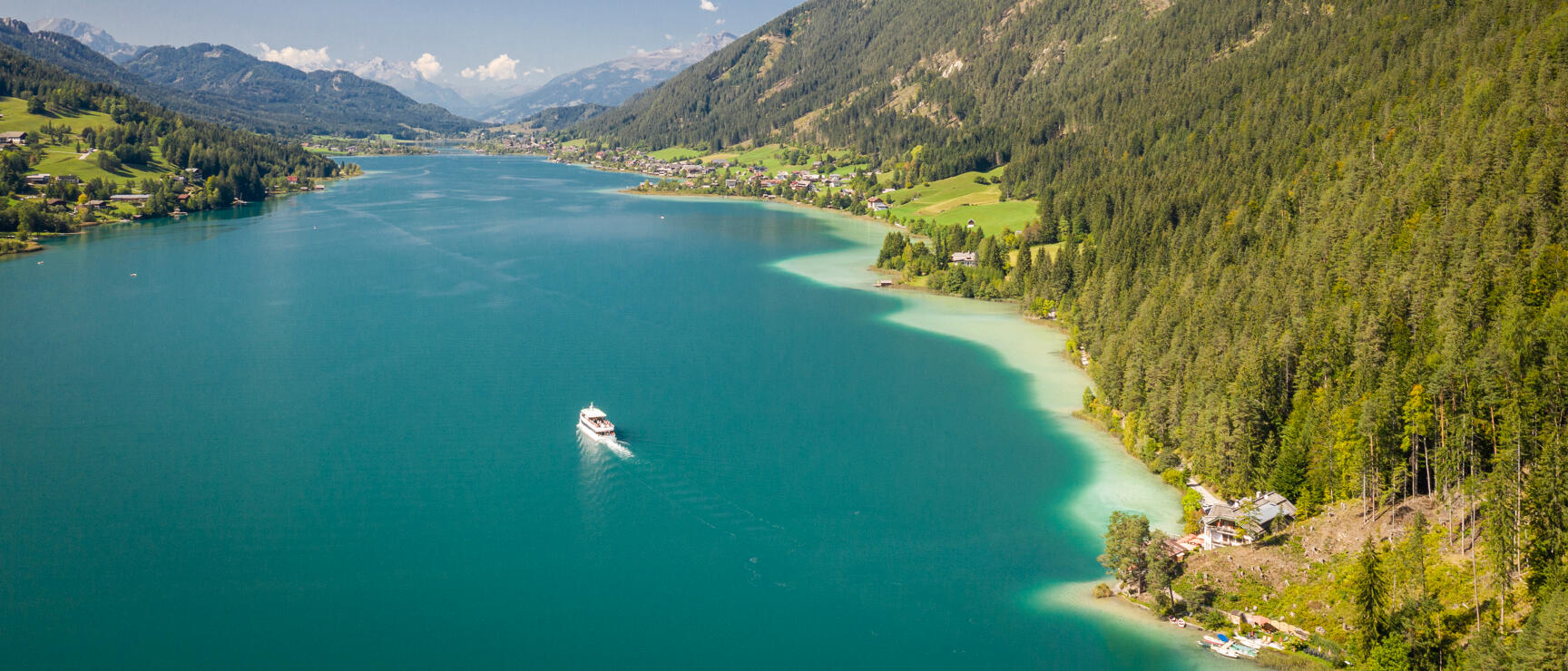
Ice, water and rock have shaped Austria over millions of years, giving rise to Alpine mountains, river valleys, swimming lakes, waterfalls and gently rolling hills — each with its own distinct habitats.
In the west, the Alps reach deep into the country with peaks, Alpine pastures and forests. Hiking trails wind through nature parks and national parks, home to a wide variety of plant and animal life. To the north lie the granite and gneiss highlands and the Alpine foothills, with woodland, farmland and orchards. In the east, Lake Neusiedl, wine landscapes and the Pannonian plain define the scenery. Rivers, lakes and swimming lakes connect many regions and offer opportunities for hiking, cycling, swimming and a range of other activities on the water.
The Alps & alpine regions in Austria
The Alps stretch across 6 provinces and cover around 2/3 of Austria. Mountains, glaciers, Alpine pastures and valleys define this landscape. In summer, trails lead to summits and high pastures; in winter, skiing, cross-country skiing and ski touring take centre stage.The foothills of the Alps, lake & hiking districts
Between the Alps and the Danube lie the Alpine foothills – gentle hills, wide fields, fertile soil, rivers and scenic lakes. This rural landscape is shaped by orchards, traditional farmsteads and views full of calm and space.The granite and gneiss highlands
In northern Austria, the granite and gneiss highlands are ancient, quiet and rugged. Gentle hills, dense forests and boulders define a landscape where Earth’s history and deep calm can be felt.The Vienna basin
The Vienna Basin lies between the edge of the Alps and the Carpathians – a broad plain with fertile soils, loess hills and thermal springs. Here, city and countryside, vineyards and industry, history and modern life all meet – a place full of contrasts and movement.The Pannonian Lowlands
The Pannonian Lowlands in eastern Austria are different – dry, wide and full of light. Salt pans, reed beds, fields and vineyards meet a continental climate. A steppe-like landscape of wind and open space – ideal for rare birds and quiet nature lovers.Active in Austria's landscapes
Holidays on Alpine pastures
Alpine pastures have been part of Austria's mountain landscape for centuries. In the summer months, farmers head up to the high pastures with their animals, milking cows, making butter and cheese, and working the Almen until the traditional cattle drive back down in autumn. Austria has thousands of working Alpine pastures — from herb and cheese Almen to those for cattle, sheep and horses.
A holiday on the Alm brings this way of life within close reach, with a choice of simple mountain huts, comfortable chalets or Alpine hut villages. Many properties sit close to hiking trails or bike routes. The sound of cowbells, morning mist over the pastures and the rhythm of life at altitude set the pace of the day.