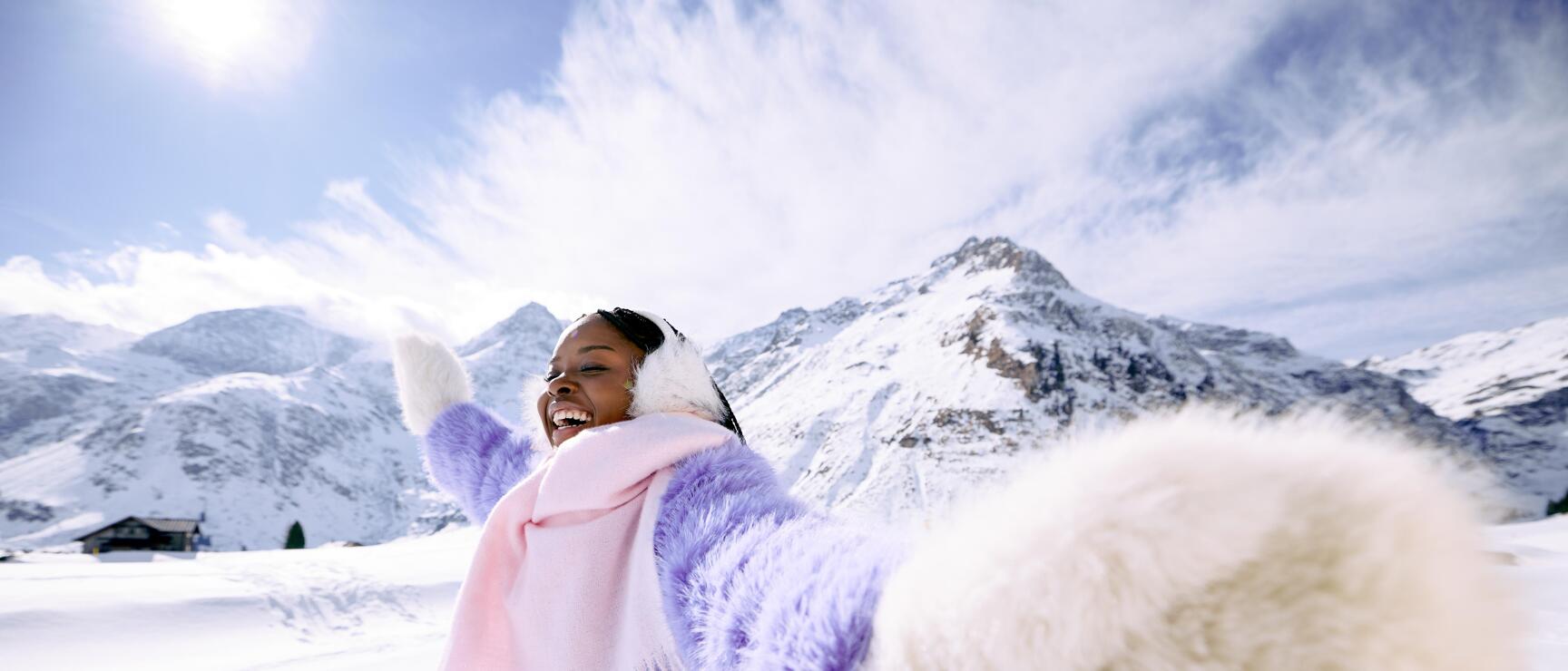
Holidays in the Austrian Mountains
Hiking, family holidays, and skiing in the Austrian Alps
Introduction
Visitors often feel the pull of these mountains as strongly as the people who call them home. For centuries, life in the Austrian Alps has been shaped by the alpine pastures and the farming that sustains them: each summer, farmers drive their cattle up to higher grazing grounds and work the pastures through the season. Around 65% of Austria's land area lies within the perimeter of the Alpine Convention.
A mountain holiday in Austria follows the seasons. In summer, trails lead to summits, alpine huts and mountain lakes – for walking, climbing and a stop at a hut along the way. In winter, life moves to the ski slopes, cross-country trails and snow-covered paths: downhill skiing, winter walking, snowshoeing, tobogganing and cross-country skiing. Get to know the Alpine way of life in Austria's mountains – they are far more than a backdrop. They are where movement, alpine farming and living traditions meet.
Our favourite mountain activities in summer
Summer walks up to rustic mountain huts, climbing routes on the rock face and cycle trails with far-reaching views – there's plenty to keep you moving. In between: mountain lakes, nature parks and huts that show a different side of Austria's Alps.Cool things to do in the mountains in winter
Winter in Austria's mountains makes room for both action and quiet: skiing on groomed pistes, tobogganing with the family, snowshoeing and winter walking through snow-covered landscapes, cross-country skiing on prepared tracks, or fat biking across the snow.Walking, moving, climbing a mountain and coming back down again – that is a parallel to life. Seen in this way, the mountain has great symbolic power and meaning
Peter Habeler, Austrian extreme mountaineer (translated from German)
Summit hikes and hiking tours
From demanding summit hikes to family-friendly trails and trail runs on the high pastures: there's more than one way up Austria's mountains. Sometimes it's a climb to the summit for sunrise, sometimes a route over alpine pastures and high-level paths to the next hut.The 10 highest peaks in Austria
Grossglockner: 3,798 m / Glockner Group in Tirol and Carinthia
Wildspitze: 3,768 m / Ötztal Alps in Tirol
Weißkugel: 3,738 m / Ötztal Alps in Tirol
Hofmannspitze: 3,722 m / Glockner Group in Tirol and Carinthia
Großvenediger: 3,666 m / Venediger Group in Tirol and Salzburg
Hinterer Brochkogel: 3,628 m / Ötztal Alps in Tirol
Hintere Schwärze: 3,624 m / Ötztal Alps in Tirol
Similaun: 3,599 m / Ötztal Alps in Tirol
Großes Wiesbachhorn: 3,564 m / Glockner Group in Salzburg
Vorderer Brochkogel: 3,562 m / Ötztal Alps in Tirol